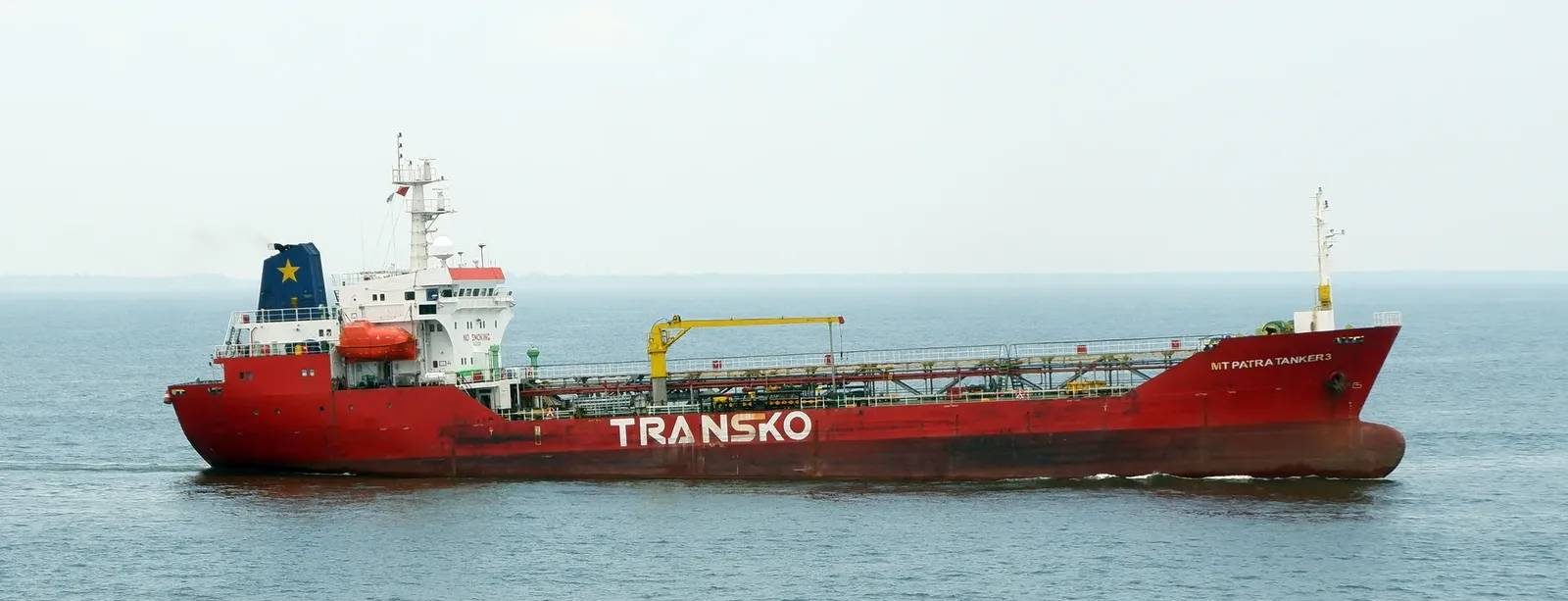
The alternator on the Auxiliary Engine (AE) is the primary source of electrical energy on board a ship, powering various vital systems such as navigation, pumps, lighting, and emergency equipment. Tankers like the MT Patra Tanker 3 rely on the reliability of their alternators to ensure safe and efficient operations.
After long operating hours and exposure to the marine environment, the AE alternator on this ship experienced winding damage, degraded insulation, and unstable output performance. To prevent total failure (alternator blackout), a complete refurbishment and rewinding were performed.
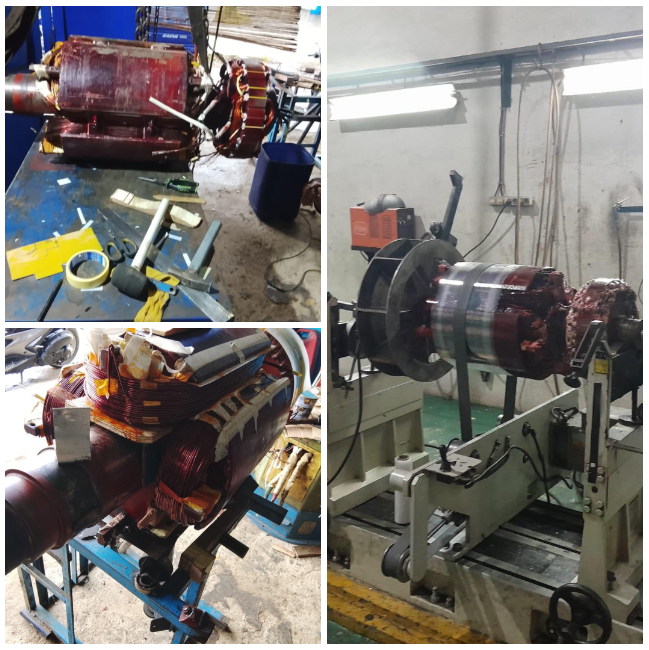
Reasons for Refurbishing & Rewinding
Before work was carried out, the crew found the following symptoms:
- Output voltage drops and instability.
- Overheating under medium to high loads.
- Indication of a short to ground in the winding.
- Abnormal current increase in one of the phases.
- A burning odor and discoloration of the stator.
The causes of damage generally come from long service life, engine vibration, engine room humidity, and oil and sea salt contamination.
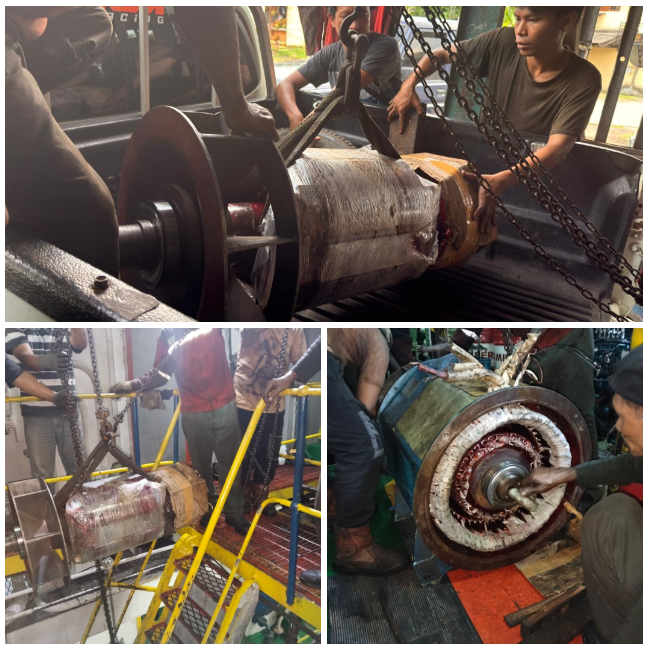
Scope of Work
Alternator Disassembly
- Remove the alternator from the auxiliary engine.
- Remove the alternator cover, cooling fan, stator, and rotor assembly.
- Inspect the AVR (Automatic Voltage Regulator), rectifier, and terminal board.
Initial Inspection & Testing
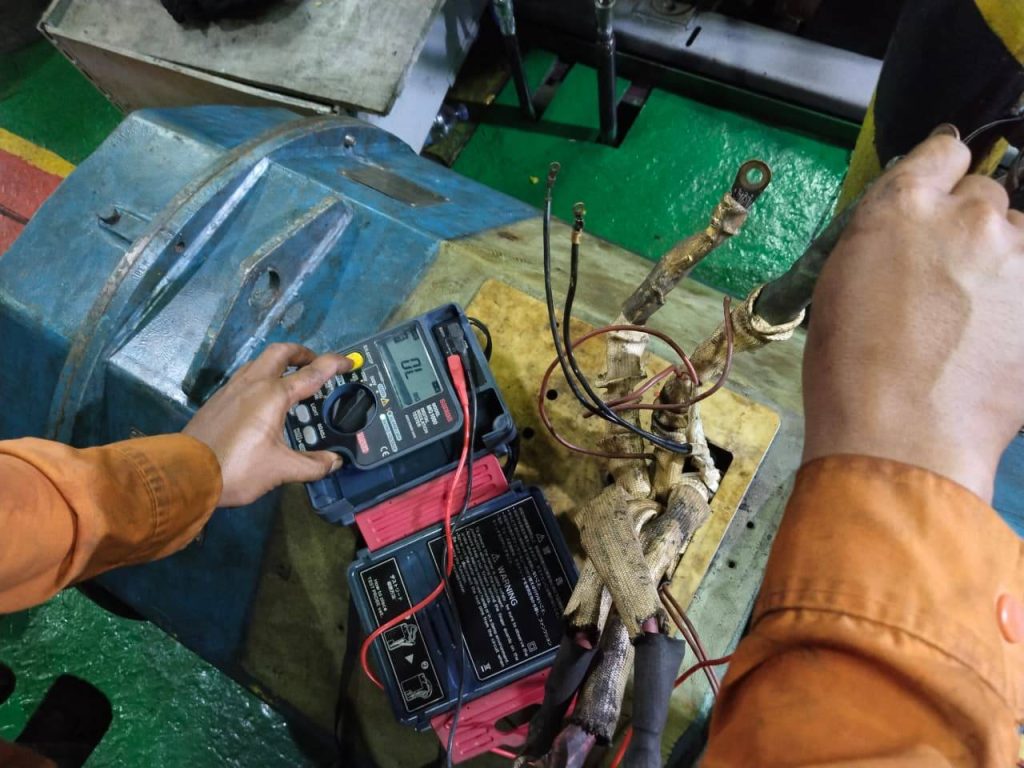
- Measuring phase-to-phase and phase-to-ground winding resistance.
- Measuring insulation value using a megger tester.
- Checking the condition of bearings, shafts, and slip rings.
- Assessing varnish condition and insulation temperature.
- Rewinding Process (Stator & Rotor)
Rewinding Process (Stator & Rotor)
If the winding is damaged or burnt, a rewinding process is carried out:
- Strip the old coil and clean the stator slots.
- Make a new coil according to the manufacturer’s winding specifications.
- Rewind the stator winding with high-quality copper wire.
- Rewind the rotor field winding if necessary.
- Impregnate the varnish using the oven baking method for maximum insulation durability.
- Balance the rotor to prevent vibration.
Refurbishment & Component Replacement
Reconditioned or replaced parts:
- Front and rear bearings.
- Slip rings and carbon brushes.
- Terminal connections and insulators.
- Rectifier unit, AVR (if out of specification).
- Cooling fan and locking bolts.
Cleaning & Assembly
- Clean all housings and internal components of carbon dust and oil.
- Assemble the alternator using standard torque.
- Ensure alignment of the alternator with the auxiliary engine.
Testing & Commissioning
- Output voltage and frequency testing (50/60 Hz).
- Incremental load testing: 25%, 50%, 75%, and 100%.
- Alternator temperature rise measurement.
- Vibration and noise testing.
- AVR operation verification to maintain voltage stability.
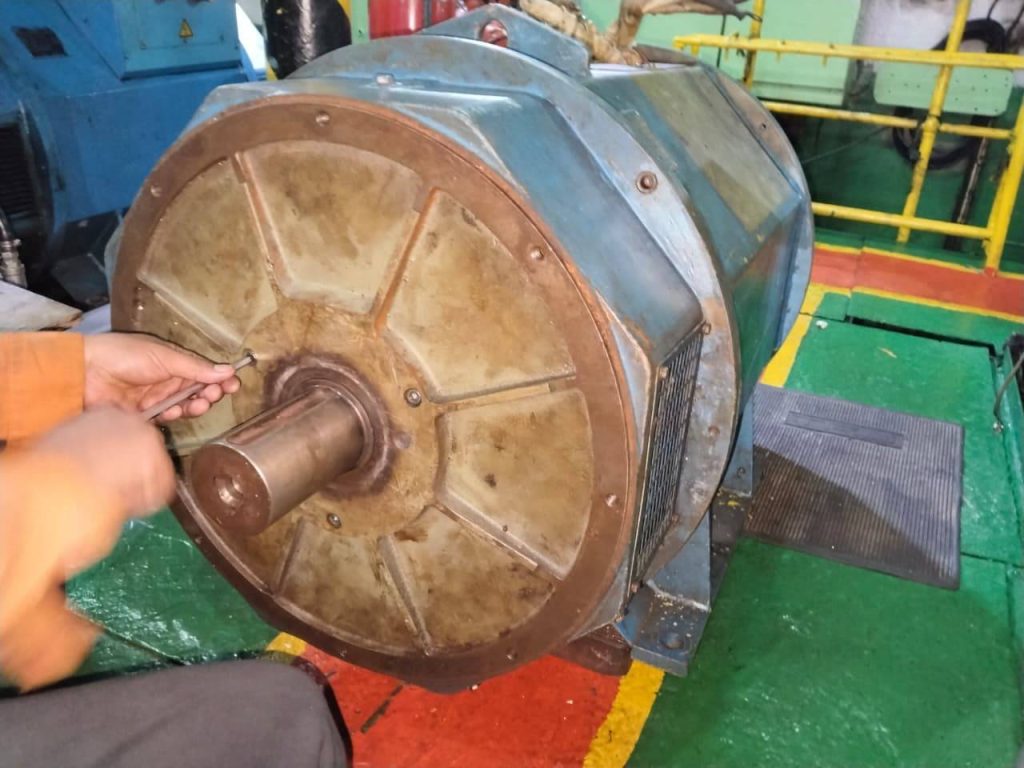
Results After Refurbishment & Rewinding
After the overhaul was completed, the alternator was successfully restored to optimal performance:
- The output voltage stabilized again, according to manufacturer specifications.
- No overheating was observed during full-load testing.
- The winding insulation value increased dramatically to >20 MΩ.
- Alternator noise and vibration were significantly reduced.
- Alternator efficiency increased after rotor balancing.
- The alternator is ready to support long-term AE operations.
Conclusion
The refurbishment and rewinding of the MT Patra Tanker 3 Auxiliary Engine alternator demonstrated that comprehensive maintenance can restore an alternator’s performance to optimal condition. With a combination of detailed inspection, professional rewinding, rotor balancing, and critical component replacement, the alternator returned to operating efficiently and reliably.
This case study demonstrates the importance of maintaining a ship’s electrical equipment to ensure a continuous power supply and operational safety.