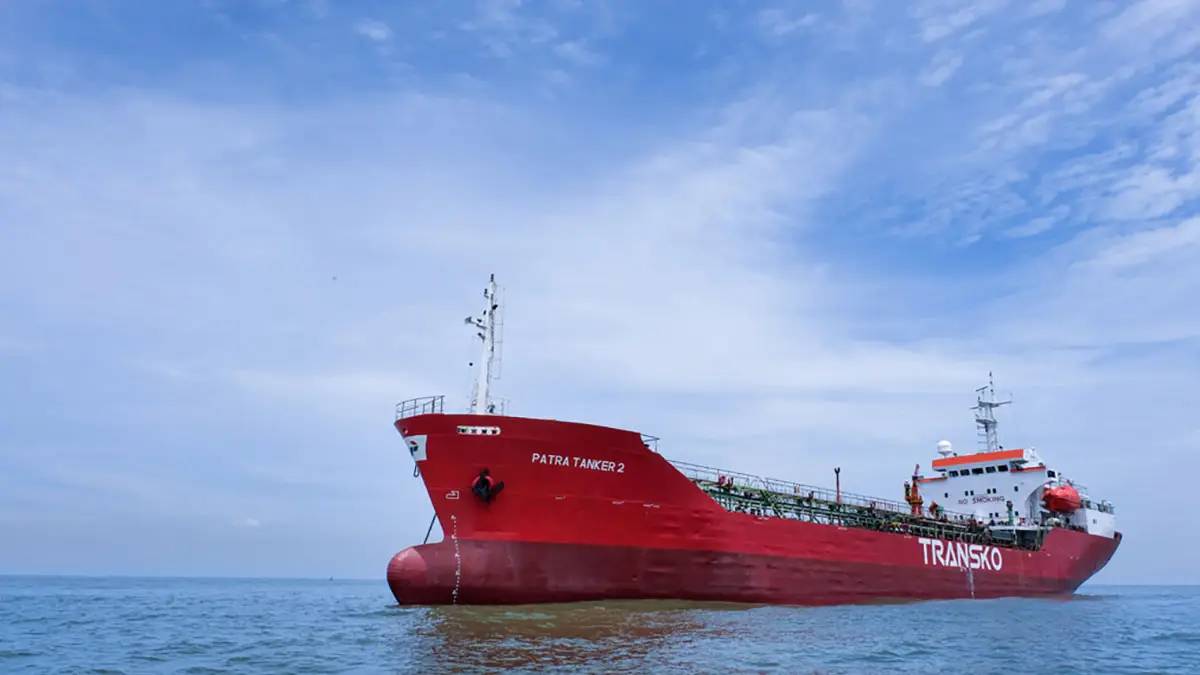
The Cargo Hose Handling Crane is a crucial piece of equipment on tankers like the MT Patra Tanker 2. This crane is used to lift, position, and handle cargo hoses during the loading and unloading of liquid materials at terminals or offshore facilities.
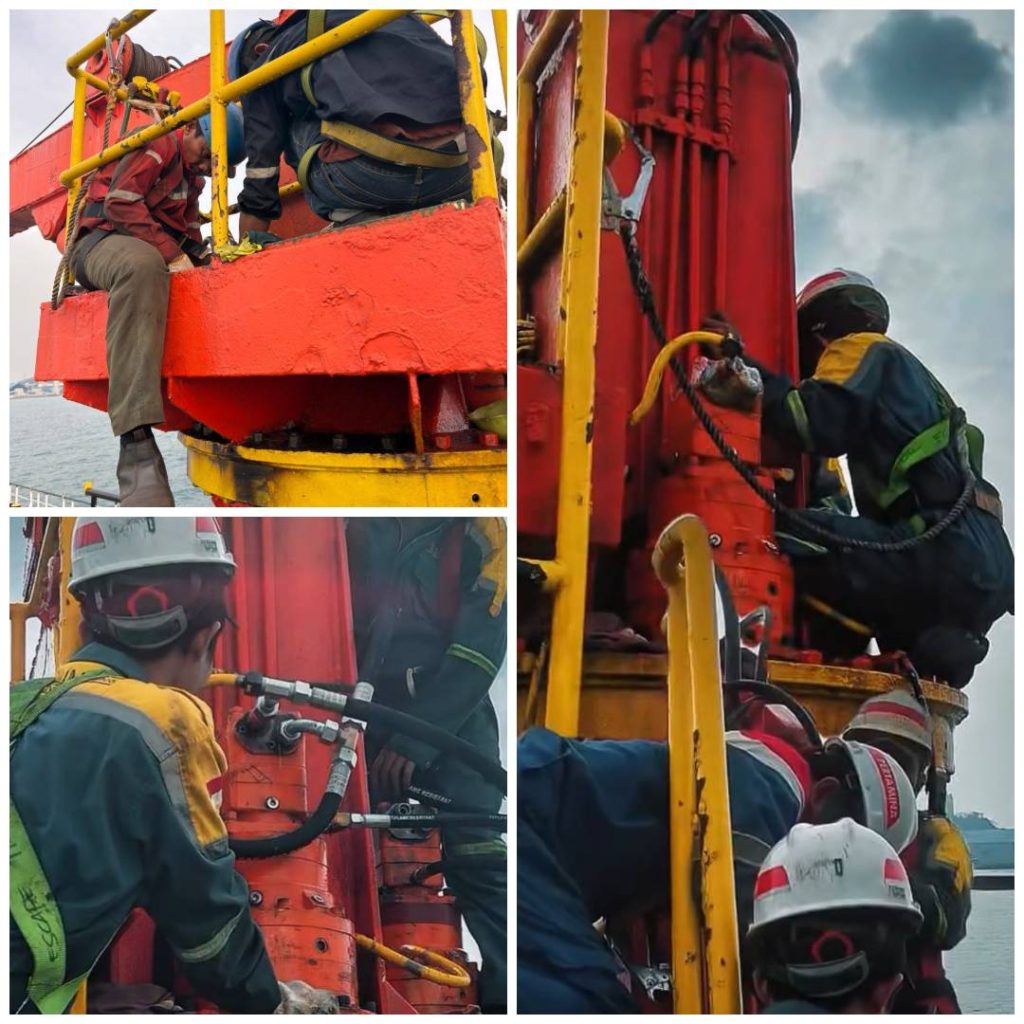
One of the main components of the crane system is the hydraulic motor, which generates rotation and power for hoisting, slewing, and luffing movements. After long hours of operation and exposure to the marine environment, the hydraulic motor’s performance decreases, requiring a complete overhaul to restore its efficiency and reliability.
Scope of Work
Dismantling & Disassembly Unit
- Remove the hydraulic motor from the crane housing.
- Drain the hydraulic oil before disassembly.
- Dismantle all internal components: housing, shaft, rotor, piston, valve plate, and bearings.
- Inspect the condition of the coupling, flange, and high-pressure fittings.
Inspection & Measurement
Perform detailed inspections on critical components:
- Measuring piston and slipper wear.
- Inspecting the cylinder block for scoring and pitting.
- Measuring valve plate and port plate clearance.
- Inspecting bearing and bushing condition.
- Measuring shaft runout and spline condition.
- Inspecting seals, o-rings, and gaskets.
Cleaning and Reconditioning
- Clean all components using chemical cleaning.
- Remove sludge and contaminants from internal passages.
- Lap the valve plate surface if within manufacturer’s tolerances.
- Flush the crane’s hydraulic lines to prevent recontamination.
Replacement of Worn Components
Some parts that were replaced:
- Seal kit & o-ring set.
- Shaft seals & mechanical seals.
- Bearings & bushings.
- Piston shoe/slipper.
- Internal gaskets.
- Crane hydraulic filter.
All components use spare parts according to hydraulic motor manufacturer standards.
Assembly & Testing
- Reassemble the hydraulic motor according to the manufacturer’s torque specifications.
- Fill with new hydraulic oil with the crane’s standard operating viscosity.
- Conduct a hydraulic test bench to check for pressure and leaks.
- Conduct a functional test on the crane.
- Hoisting test
- Slewing test
- Luffing test
- Load test according to SOPe:
- Hoisting test
- Slewing test
- Luffing test
- Load test sesuai SOP
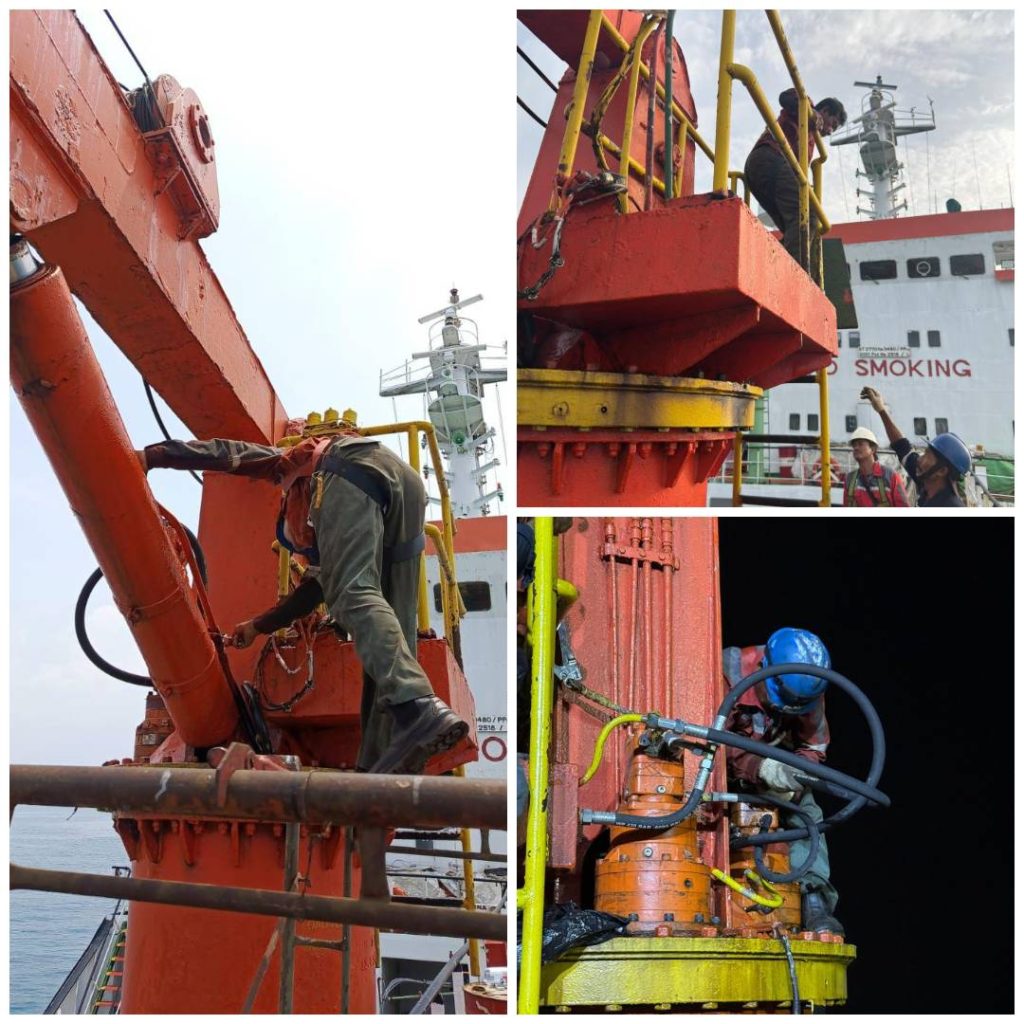
Findings During Overhaul
Scoring on Cylinder Block
Due to hydraulic oil contamination and lack of filtration.
Shaft Seal Leaking
Seals become brittle and worn due to long service life.
Slipper Piston Experiencing Heavy Wear
Reduces pressure and rotational performance on hydraulic motors.
Deposit Sludge Internal
Found in large quantities in oil passages and valve plates.
Bearings Starting to Fail
It produces abnormal noises during crane operation.
This finding demonstrates the need for regular maintenance and routine filter replacement.
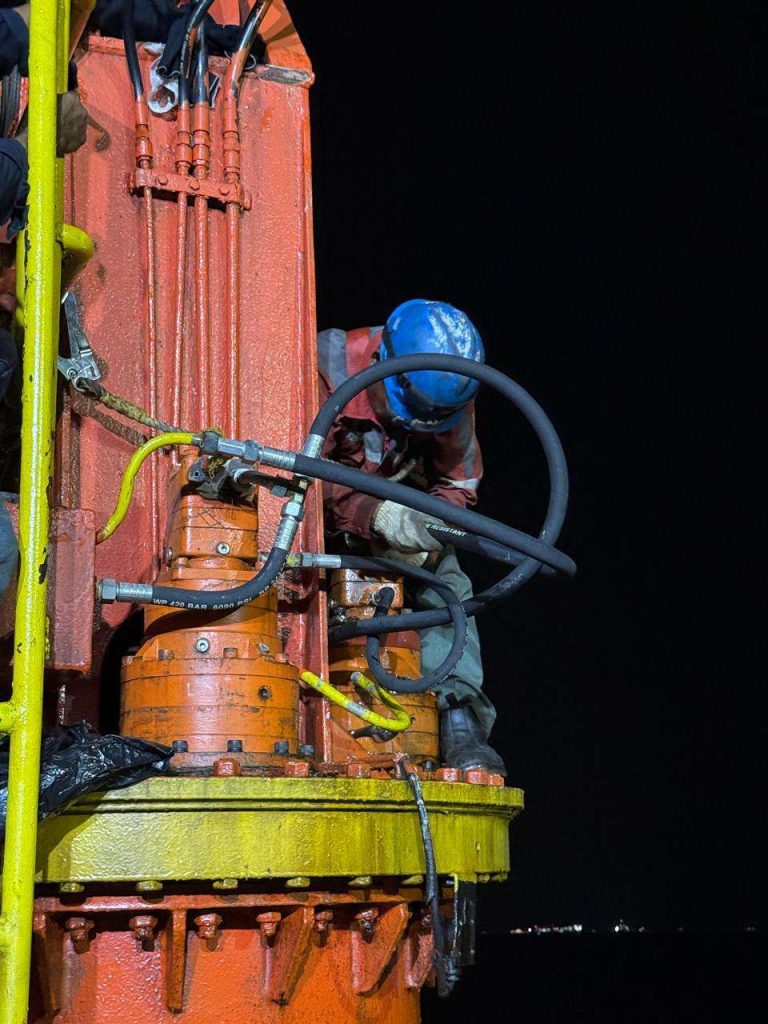
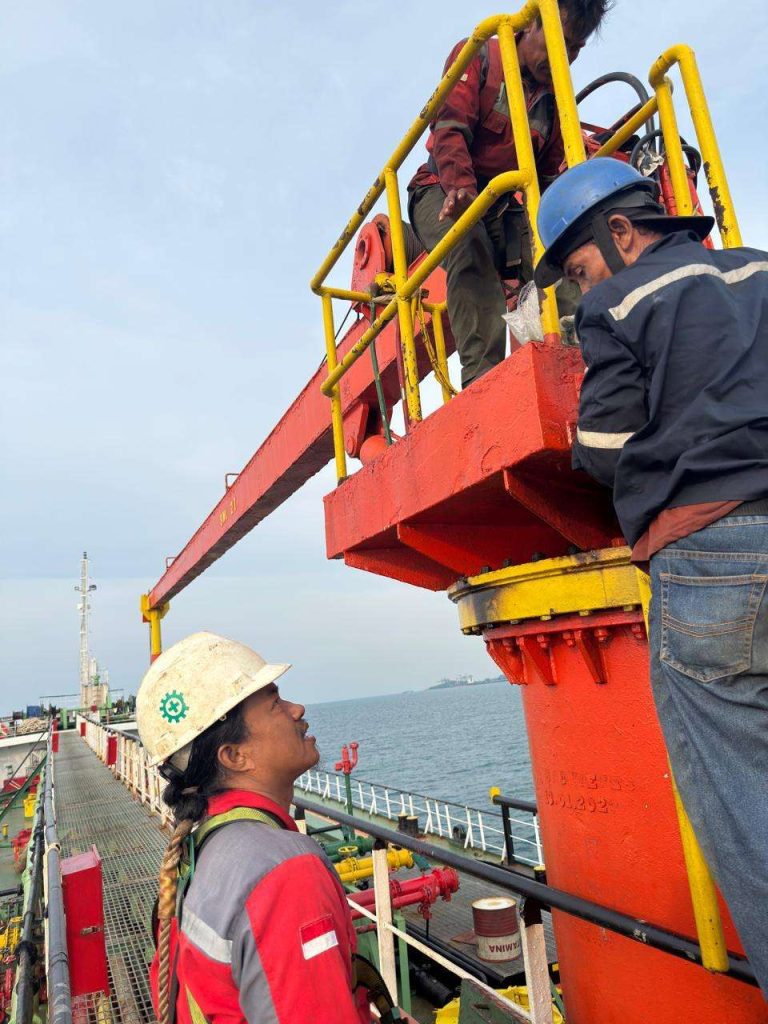
Results After Overhaul
After the overhaul was completed and tested, the following results were obtained:
- The hydraulic motor’s rotational speed returned to normal and within specifications.
- Hydraulic pressure was stable in all modes (hoist, slewing, luffing).
- There were no leaks in the shaft or housing.
- Crane operation was smoother with minimal vibration.
- Hydraulic temperature was stable even under high loads.
- The risk of downtime was significantly reduced.
- The crane was safe to use again for cargo hose operations at the terminal and offshore.
Conclusion
The overhaul of the Cargo Hose Handling Crane’s hydraulic motor on the MT Patra Tanker 2 has proven to significantly improve its performance. With a thorough inspection, thorough cleaning, and proper component replacement, the hydraulic motor is now operating optimally and ready to support tanker operations that require high reliability.
This case study demonstrates the importance of preventive maintenance on ship hydraulic equipment to maintain safety, efficiency, and operational continuity.