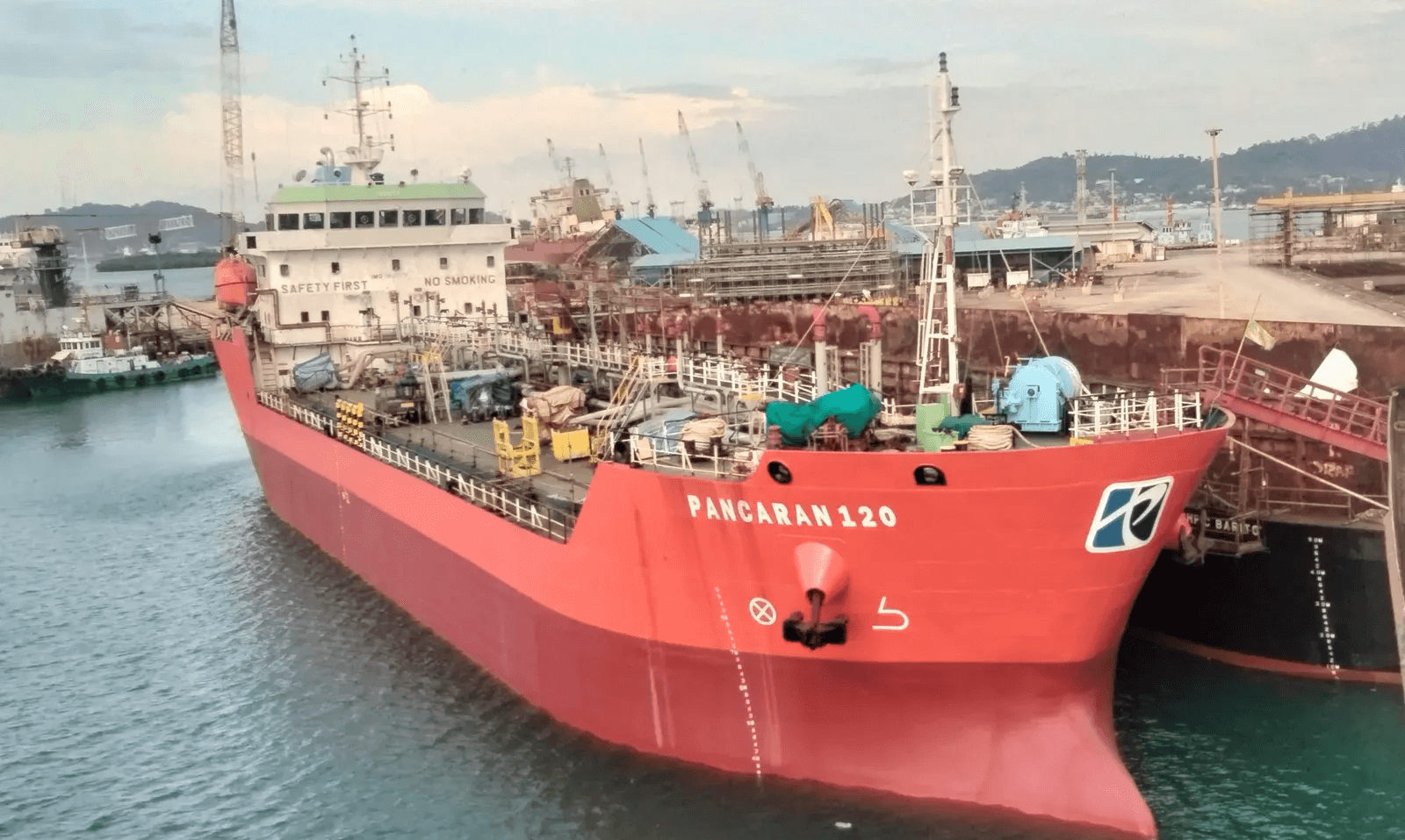
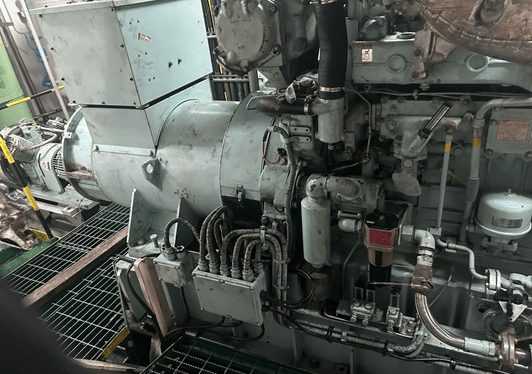
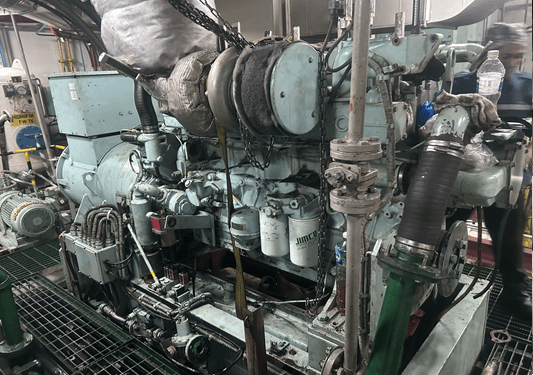
The auxiliary engine is a critical component onboard tanker vessels such as MT. PANCARAN 120, providing electrical power for navigation systems, cargo operations, lighting, and essential onboard equipment. Continuous operation over long periods causes natural wear on engine components, making auxiliary engine overhaul a vital maintenance activity.
This article explains the overhaul process of the auxiliary engine on MT. PANCARAN 120, including the scope of work, technical procedures, and key operational benefits.
What Is an Auxiliary Engine Overhaul?
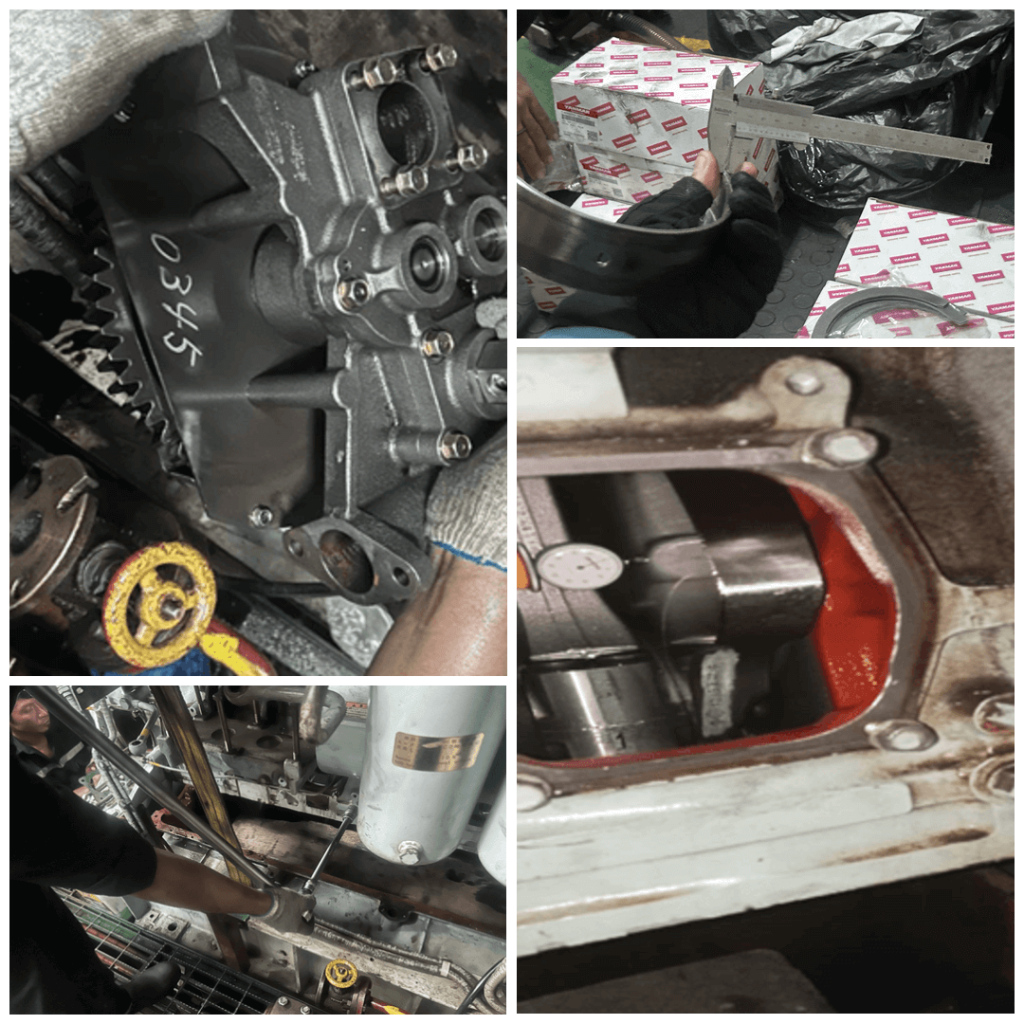
An auxiliary engine overhaul is a comprehensive maintenance procedure involving partial or complete disassembly of the engine, detailed inspection, repair, and replacement of worn components. The objective is to restore engine performance in accordance with manufacturer specifications and marine safety standards.
On MT. PANCARAN 120, the overhaul ensures reliable power generation and uninterrupted vessel operations.
Reasons for Auxiliary Engine Overhaul
Auxiliary engine overhaul is required due to several operational factors, including:
- Decreased engine performance
- Increased fuel and lubricating oil consumption
- Abnormal engine noise and vibration
- Unstable lubricating oil pressure
- High exhaust gas temperature
- Wear due to high running hours
- Compliance with Planned Maintenance System (PMS)
Timely overhaul helps prevent major engine failure and unexpected vessel downtime.

Scope of Work: Auxiliary Engine Overhaul on MT. PANCARAN 120
1. Work Preparation
- Coordination with Chief Engineer and vessel management
- Implementation of lock-out tag-out (LOTO) safety procedures
- Preparation of tools, measuring instruments, and spare parts
- Recording initial engine performance data
2. Engine Disassembly
The overhaul process includes systematic disassembly of major components, such as:
- Cylinder head assembly
- Fuel injectors and fuel pumps
- Valve mechanism and rocker arms
- Pistons and connecting rods
- Cylinder liners
- Bearings and crankshaft inspection
3. Inspection and Measurement
All components are inspected according to manufacturer tolerances and marine standards.
Cylinder Head
- Valve and valve seat inspection
- Carbon deposit cleaning
- Leak testing
Piston and Piston Rings
- Ring groove and skirt inspection
- Measurement of ring end gap and clearance
Cylinder Liner
- Wear measurement
- Ovality and taper inspection
- Surface condition assessment
Bearings and Crankshaft
- Bearing clearance measurement
- Journal condition inspection
4. Replacement and Reconditioning
Worn or damaged components are replaced or reconditioned, including:
- Piston ring sets
- Main and connecting rod bearings
- Gaskets and O-rings
- Fuel injector overhaul and testing
- Valve and valve seat reconditioning
5. Reassembly and Adjustment
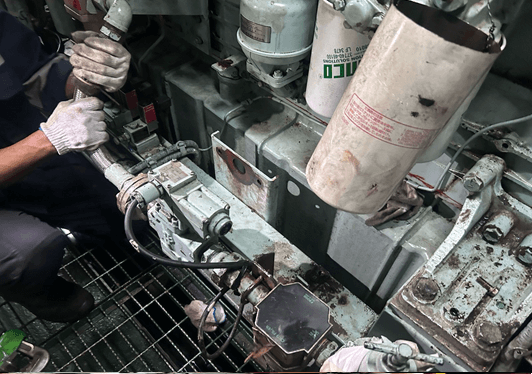
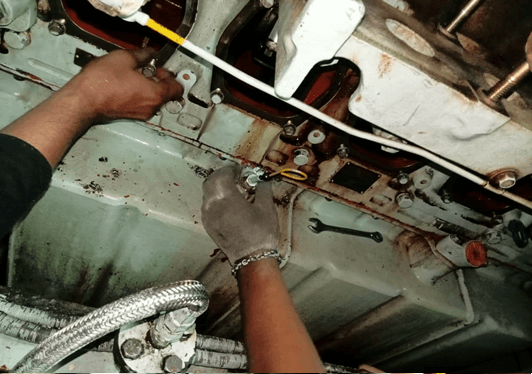
- Reassembly of all engine components following manufacturer procedures
- Bolt tightening using calibrated torque tools
- Valve clearance adjustment
- Fuel injection timing setting
6. Testing and Commissioning
After reassembly, the auxiliary engine undergoes thorough testing:
- Turning gear and free rotation test
- Engine start-up and no-load operation
- Monitoring of oil pressure, cooling temperature, and vibration
- Gradual load testing
- Final performance evaluation and documentation
Conclusion
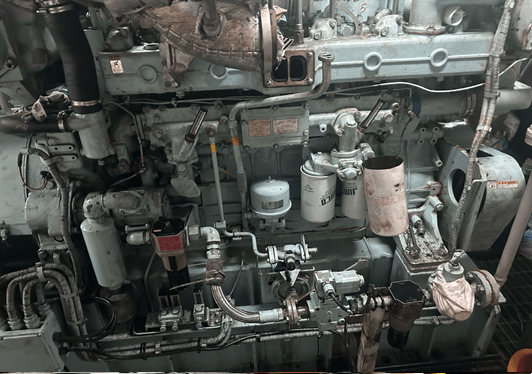
The auxiliary engine overhaul on MT. PANCARAN 120 is a crucial maintenance activity that ensures reliable power supply and safe vessel operations. Through structured disassembly, inspection, component replacement, and final testing, the auxiliary engine is restored to optimal working condition.
Properly executed overhaul enhances operational efficiency, safety, and long-term cost effectiveness for tanker vessels.