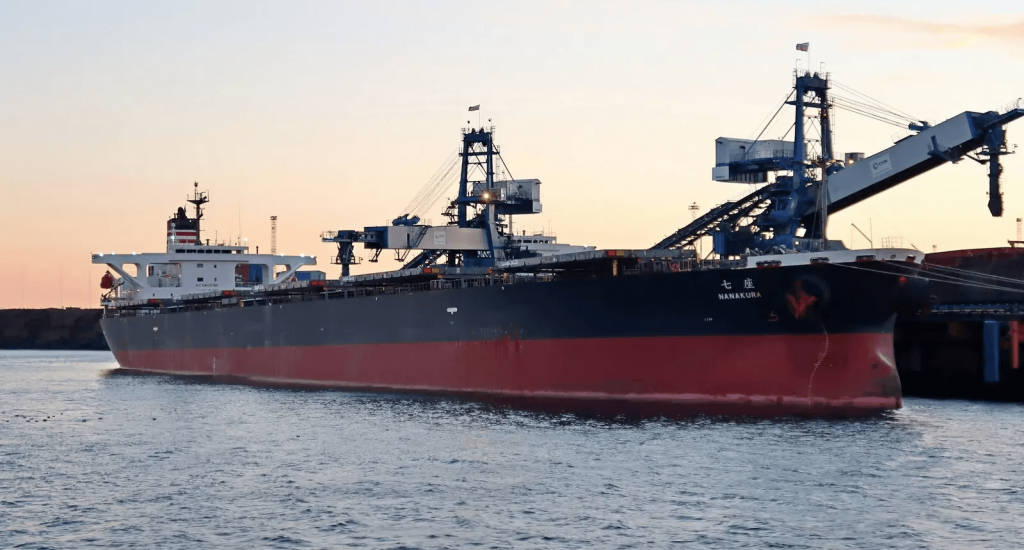
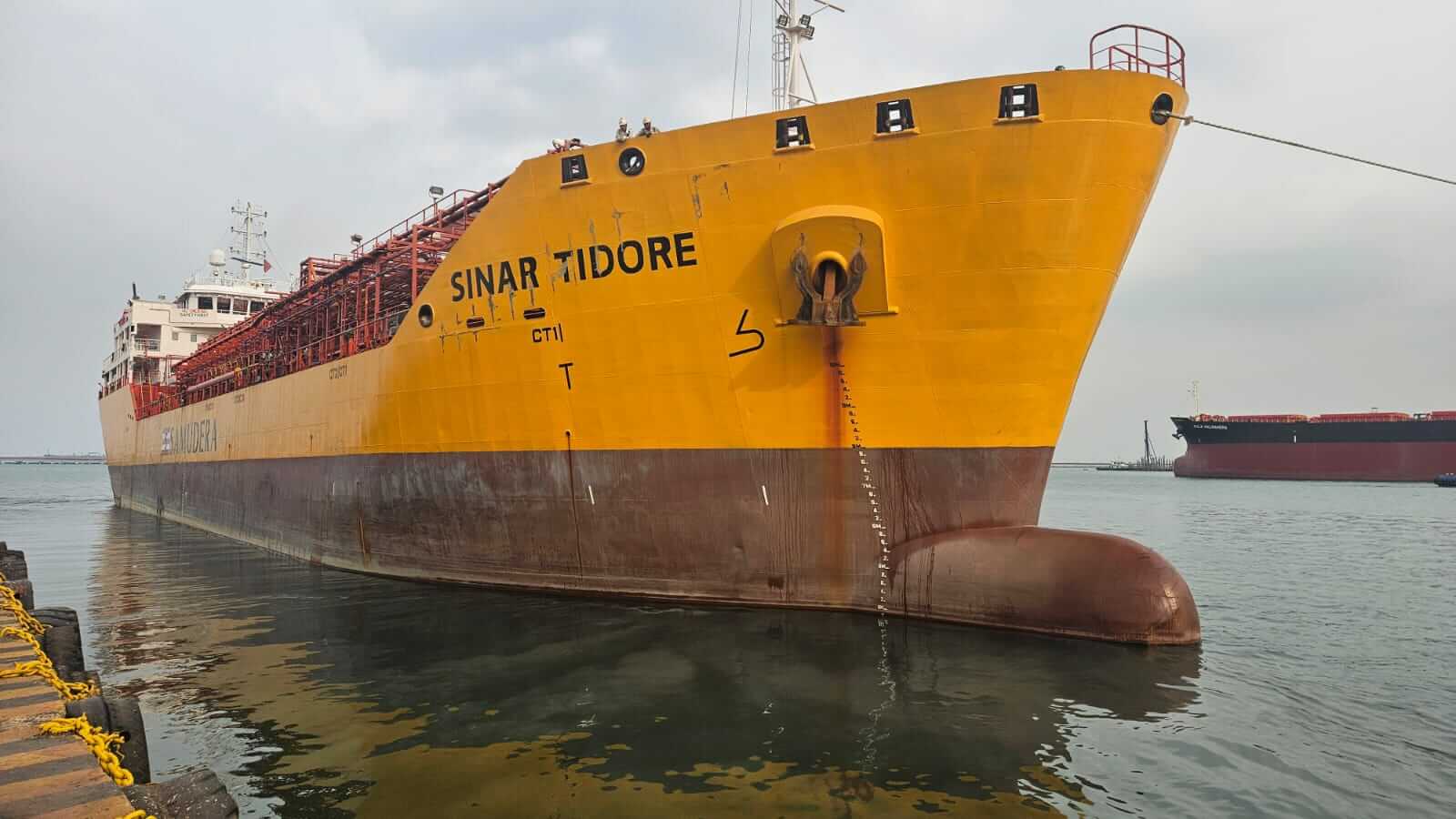
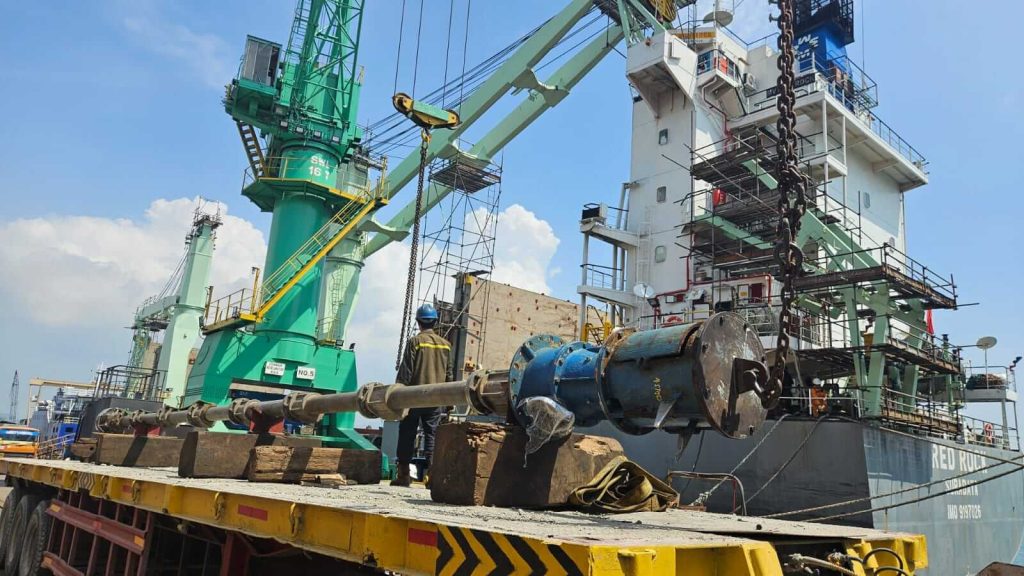
The Deep Well Pump 4S is a critical cargo handling system on tanker vessels such as MT. Sinar Tidore. It plays an essential role in pumping liquid cargo safely and efficiently. The performance and reliability of this pump depend heavily on the condition of its main rotating components, particularly the impeller and shaft.
When excessive vibration, reduced pump capacity, or abnormal noise occurs, corrective maintenance such as impeller machining, dynamic balancing, and shaft straightening is required to restore optimal performance. This article explains the process and benefits of these works on MT. Sinar Tidore.
Function of Impeller and Shaft in Deep Well Pump 4S
Impeller
The impeller converts mechanical energy from the motor into hydraulic energy to move cargo fluid. If the impeller is worn or unbalanced, it can cause:
- Excessive vibration
- Reduced pumping capacity
- Premature bearing and seal damage
- Increased power consumption
Shaft
The shaft transmits rotational power from the drive motor to the impeller. A bent or misaligned shaft can lead to severe vibration, bearing failure, and reduced pump reliability.
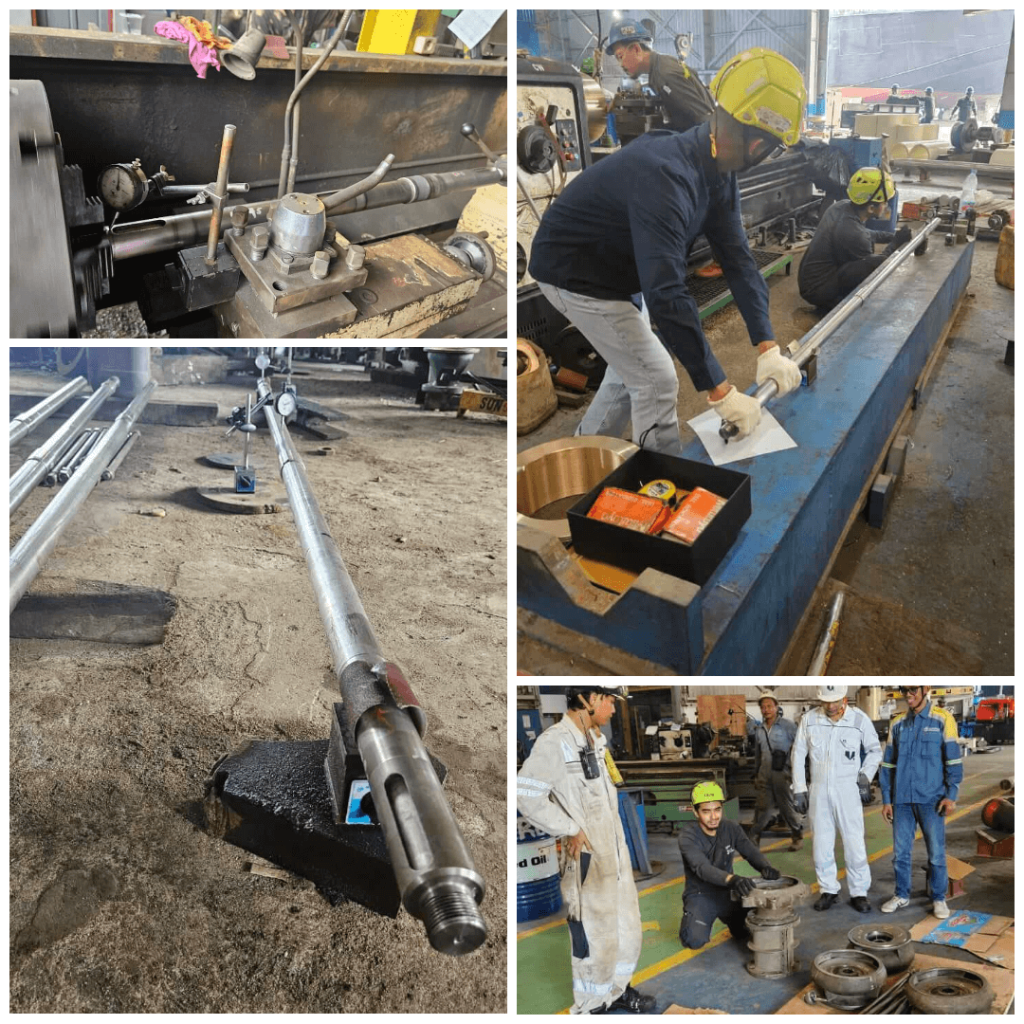
Reasons for Impeller Machining and Shaft Straightening
The following conditions indicate the need for corrective maintenance:
- Impeller erosion or mechanical wear
- Impeller mass imbalance
- Vibration levels exceeding allowable limits
- Shaft bending due to overload or impact
- Decreased performance of Deep Well Pump 4S
- Preventive maintenance in accordance with manufacturer recommendations
Impeller Machining Process for Deep Well Pump 4S
1. Initial Inspection
- Visual inspection of the impeller
- Dimensional measurement and wear assessment
- Crack and erosion inspection on impeller blades
2. Machining Process
- Precision turning and surface correction
- Restoring proper clearances according to specifications
- Blade profile correction to ensure optimal fluid flow
- Surface finishing and polishing
All machining works are performed with high precision to maintain pump efficiency and design characteristics.
What Is Dynamic Balancing?
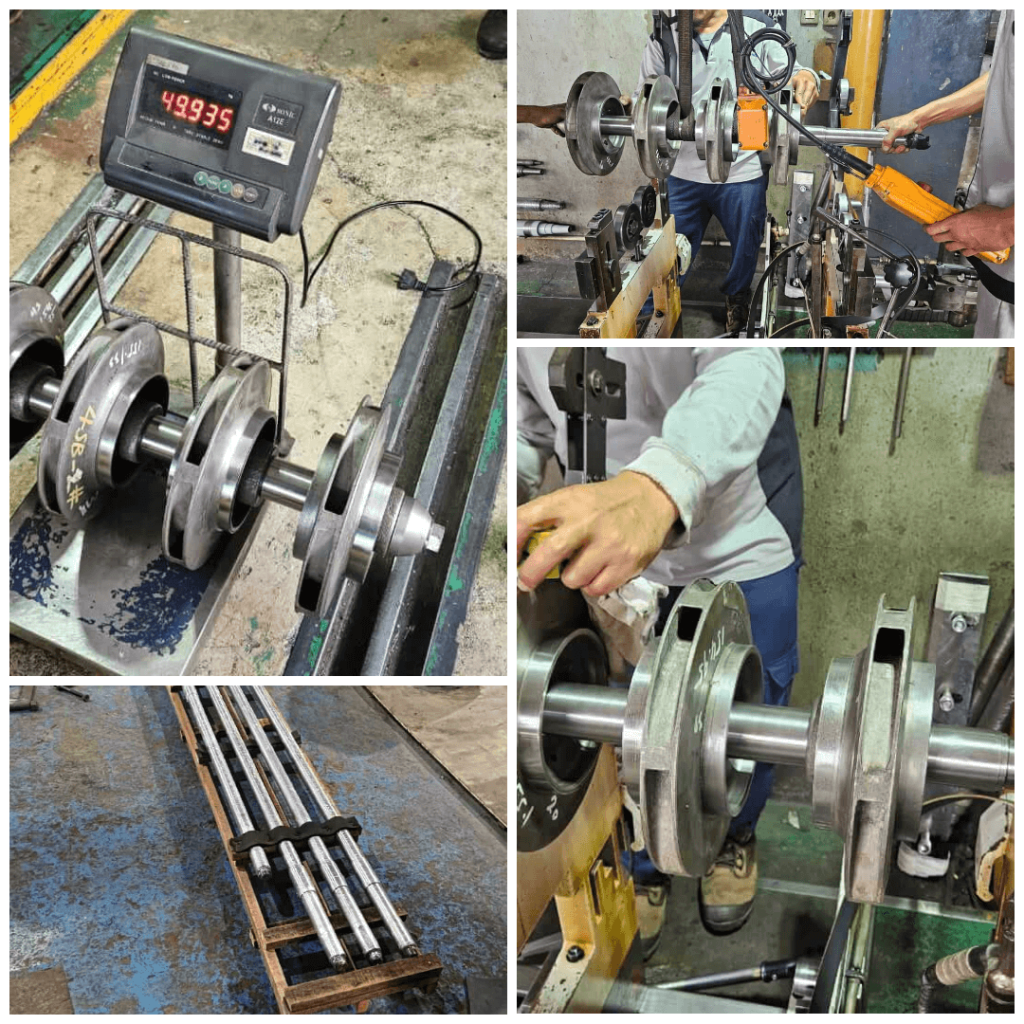
Dynamic balancing is a process of balancing rotating components under operating conditions to eliminate uneven mass distribution and minimize vibration.
Dynamic Balancing Procedure
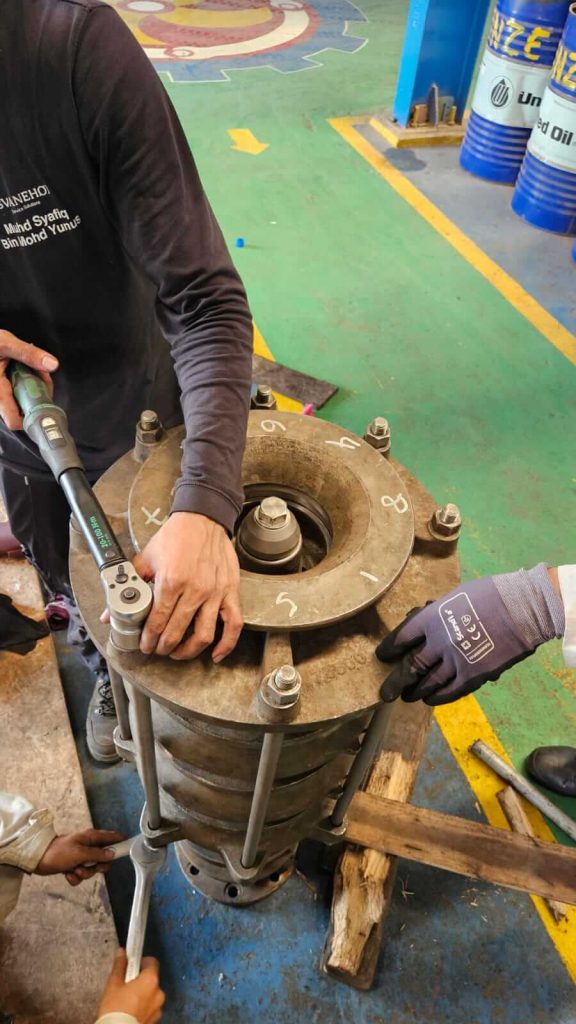
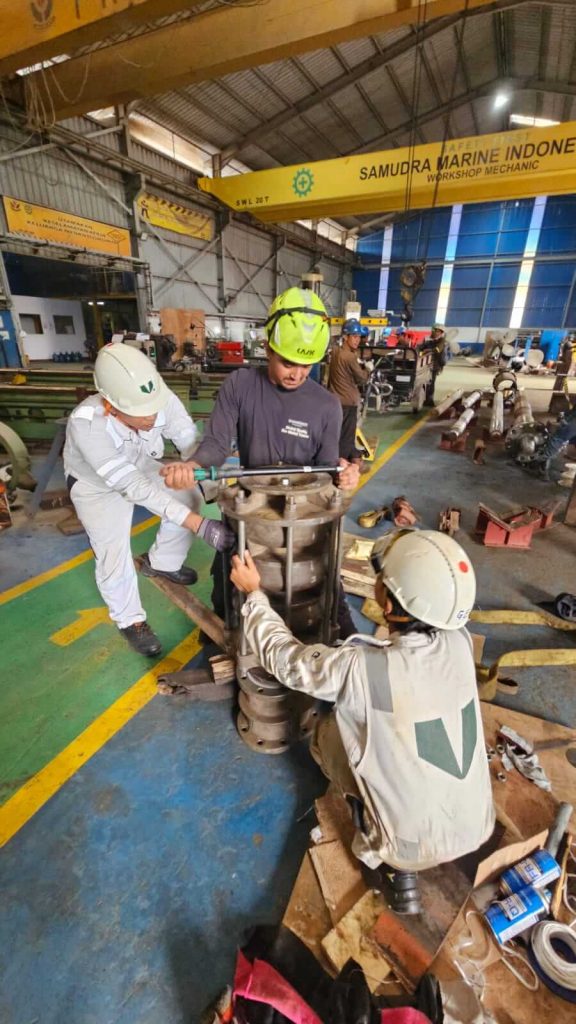
- Mounting the impeller on a balancing machine
- Measuring vibration and unbalance values
- Adding or removing mass at calculated positions
- Re-testing until vibration values meet acceptable standards
Dynamic balancing is essential to ensure smooth operation and extend the service life of bearings and shafts.
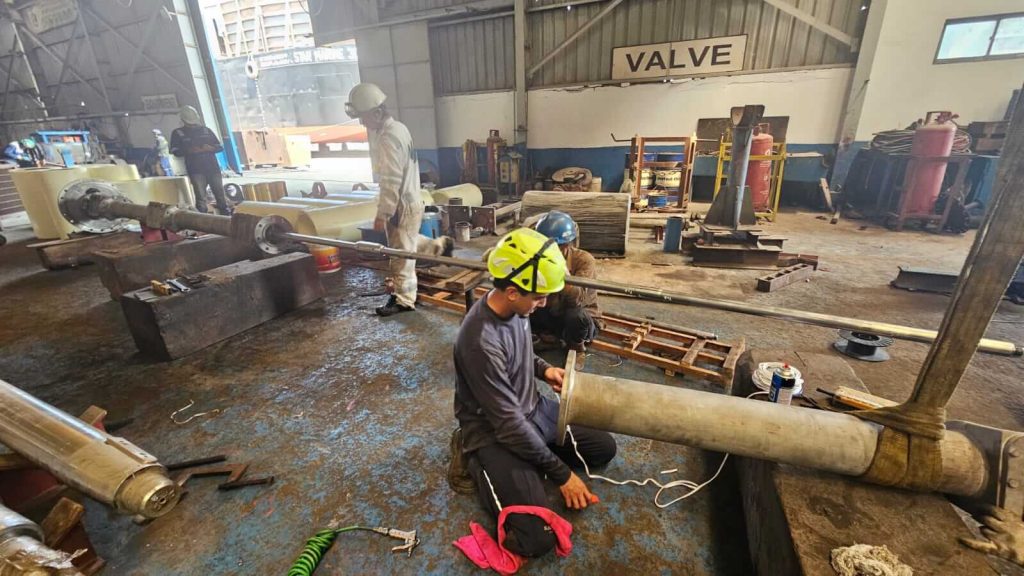
Shaft Straightening Process for Deep Well Pump 4S
1. Shaft Inspection
- Measuring shaft run-out using a dial indicator
- Identifying bending or deformation points
2. Straightening Process
- Controlled straightening using a hydraulic press
- Gradual correction while monitoring tolerances
- Re-measuring straightness after adjustment
3. Final Inspection
- Final run-out verification
- Surface condition inspection
- Compatibility check with impeller and coupling
Conclusion
Impeller machining, dynamic balancing, and shaft straightening of the Deep Well Pump 4S on MT. Sinar Tidore are essential maintenance activities to ensure stable, efficient, and safe pump operation. By restoring component precision and balance, the deep well pump can operate at optimal performance, supporting safe and efficient cargo transfer.
These works are highly recommended as part of both preventive and corrective maintenance programs for tanker vessels.